
We Don’t Just Build AI Systems. We TransformHow Your Entire Business Operates.

Most AI projects fail because they start with technology and hope to find a problem worth solving. We start with your operations — every workflow, every bottleneck, every hour your team wastes on work a machine should handle. We quantify the opportunity. We design the architecture. Then we build, deploy, and run the AI systems that deliver the ROI we promised.

This is not a chatbot shop. This is a strategic engineering partnership that compounds over time.

Most AI Initiatives Fail. Here’s Why.

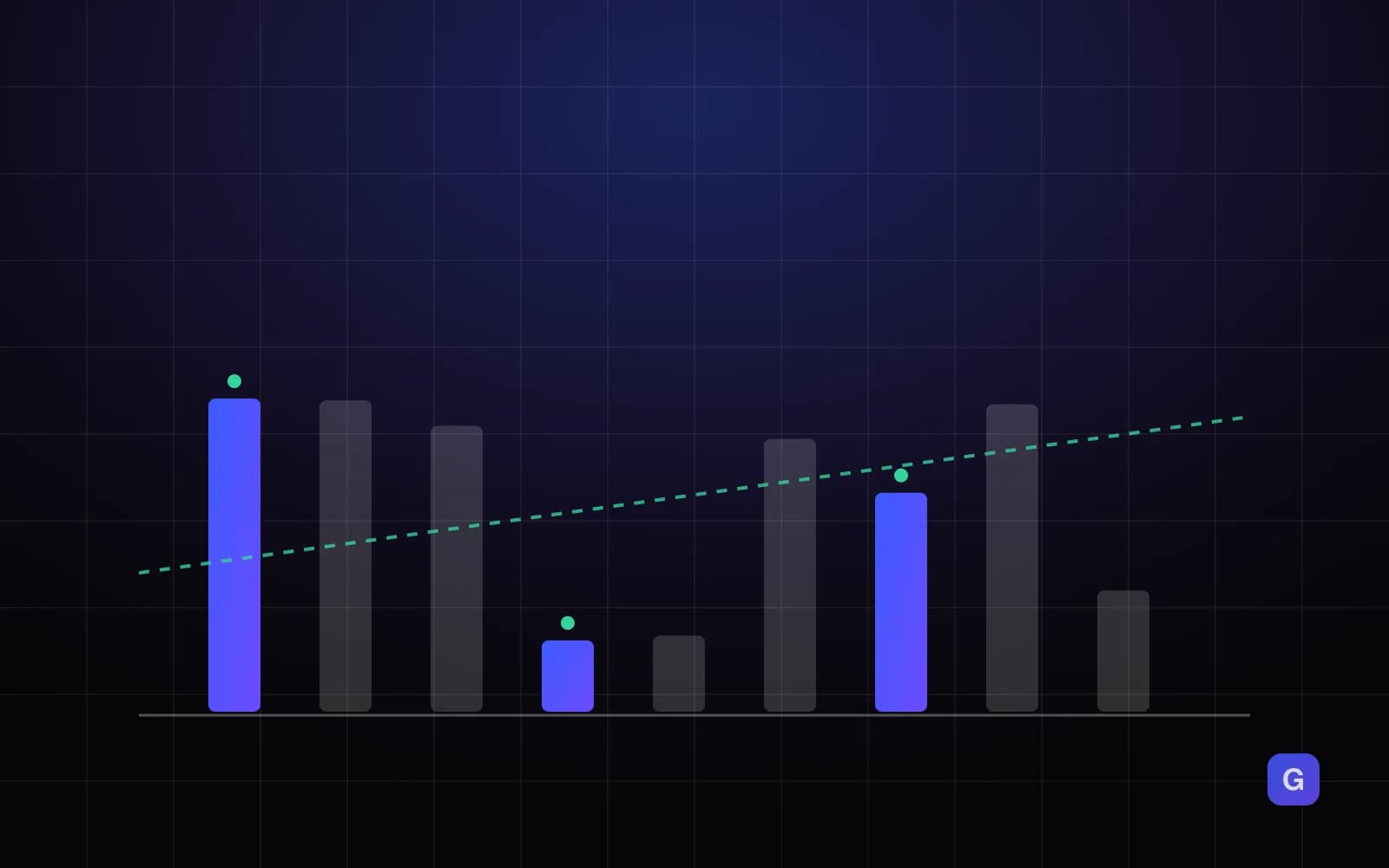
Struggle to scale (McKinsey)
0 %
Generate value (MIT Sloan)
0 %
Erroneous outcomes (Gartner)
0 %

The failure isn’t in the technology. GPT-4 is extraordinary. Claude can analyze entire codebases. Open-source
models are reaching production quality. The tools have never been more capable. The failure is in
the gap between capability and implementation.

Failure Mode 1: “Solution Looking for a Problem

A CTO watches a demo, gets excited, and tells the team to “add AI somewhere.” Six months later, they’ve built an internal chatbot that 12 people use and nobody relies on. The board asks about ROI. There is none.

Failure Mode 2: “Pilot Purgatory”

The data science team builds a proof of concept that works beautifully in a Jupyter notebook. It never reaches production. The engineering team doesn’t know how to deploy it. The operations team doesn’t trust it. It sits in a staging environment, slowly becoming irrelevant as the underlying data drifts.

Failure Mode 3: “Vendor Roulette”

Leadership hires an AI vendor who builds a system, deploys it, and disappears. Six months later, the model accuracy has degraded, the API integrations are breaking, nobody understands how it works, and the vendor wants another $80K to fix it.

Our model eliminates all three failure modes.

We don’t let you build the wrong thing (we audit first). We don’t leave you in pilot purgatory (we engineer for production from day one). And we don’t disappear after deployment (we operate and optimize as your ongoing AI partner).

How the AI Transformation Partner Model Works

We operate in three phases. Each phase delivers standalone value — you can stop after any phase and walk away with something useful.
But the compounding effect of all three phases is where the real transformation happens. 

Audit
2-6 weeks
$5K-$60K
Phase 1 Audit & Strategy
Build
2-6 months
$15K-$250K+
Phase 2 Build & Deploy
Ongoing
12+ months
$2K-$20K/month
Phase 3 Operate & Expand

Phase 1

Audit & Strategy

What happens: We get inside your business. Not at the executive level — at the workflow level. We interview the people who actually do the work. We watch how data moves through your systems. We map every process, every handoff, every manual step. Then we quantify what each of those steps costs you in time, salary, errors, and opportunity.

The deliverable is a transformation blueprint — a document that tells you exactly where AI creates value in your business, how much value, and in what order to capture it. 

AI Readiness Assessment — $5,000–$15,000

The entry point. A 2–week diagnostic focused on one department or one core business process.

WHAT YOU RECEIVE:
  • Assessment of your AI readiness across 5 dimensions: data infrastructure, process maturity, team capability, technology stack, and strategic alignment — each scored 1-5 with specific improvement recommendations
  • Top 10 AI automation opportunities in the assessed area, ranked by a composite score of ROI potential (projected annual savings), implementation feasibility (technical complexity, data readiness), and strategic importance (competitive advantage, customer impact)
  • 3 quick wins — automations that can be implemented in 30 days or less with minimal investment, designed to demonstrate value and build organizational momentum
  • Technology recommendations — specific platforms, models, and architecture patterns for each opportunity, with estimated implementation costs
  • A prioritized roadmap for the next 6-12 months

Who it's for: Companies that suspect AI can help but don't know where to start. The Assessment costs $5K-$15K and typically identifies $200K-$2M+ in annual savings potential. The math usually sells the next phase.

Engagement structure: 1 AI strategist + 1 analyst. 40-60 hours total. 3-5 stakeholder interviews. Delivered as a 20-30 page report with a 60-minute executive presentation.

Full AI Operations Audit — $15,000–$60,000

The comprehensive diagnostic. A 4–8 week deep dive across your entire organization — every department, every major workflow, every system interaction.

WHAT YOU RECEIVE:
  • Complete operational process map — visual documentation of every significant workflow in your organization, including triggers, steps, systems used, data flows, handoffs, time allocation, and error rates
  • Department-by-department AI opportunity analysis — for each department (sales, marketing, operations, finance, customer success, HR, etc.), a detailed assessment of automation potential with specific use cases
  • Quantified ROI model — for each identified opportunity, a three-scenario financial model (conservative, moderate, aggressive) showing projected annual savings, implementation cost, payback period, and 5-year NPV
  • Technical architecture designs — for the top 5–10 opportunities, detailed system architecture diagrams showing how the AI solution integrates with your existing technology stack, including data flows, API connections, model selection, and infrastructure requirements
  • Implementation roadmap — a phased plan with three horizons: Quick Wins, Core Automation, and Advanced AI
  • Change management plan — team training requirements, communication strategy, internal champion identification, and organizational readiness recommendations
  • Total Cost of Ownership vs. Total Value model — a comprehensive financial framework that leadership can use to secure budget and track ROI over time

Who it's for: Mid-market companies ($50M–$200M revenue) that are serious about AI transformation and want a definitive answer to "where should we invest, how much will it cost, and what will we get?"

Engagement structure: 1 senior AI strategist + 1 solutions architect + 1 analyst. 150–300 hours total. 15–30 stakeholder interviews across all major departments. Delivered as a 60–100 page blueprint with a 90-minute executive presentation and a 2-hour technical deep-dive for the implementation team.

Why the audit is the most important thing we do:

The audit isn’t a sales tool that justifies the development phase. It is a genuine, standalone product. If we do the audit and the conclusion is “you don’t need AI right now” or “your data infrastructure isn’t ready” or “your budget should go somewhere else first” — we’ll tell you that. We’d rather deliver an honest audit that earns trust than a inflated one that leads to a failed implementation.

When the audit does reveal significant opportunity — and in our experience, it almost always does for companies above $5M in revenue — the implementation engagement sells itself. The audit contains the scope, the architecture, the timeline, and the business case. The decision-maker’s question shifts from “should we do this?” to “how fast can we start?”

Phase 2

Build & Deploy

What happens: We build the AI systems identified in the audit, deploying them incrementally so you see measurable results at every milestone.

We don’t build everything at once. We follow the roadmap from the audit, starting with quick wins that demonstrate value and build internal momentum, then progressing to the core automation systems that drive the bulk of the ROI.

Sprint structure

Every project runs in 2-week sprints. Each sprint ends with a demo of working software deployed to a staging or production environment. You see exactly what you’re paying for, every two weeks. No black boxes. No “it’ll be ready in 3 months.”

AI Agents & Conversational Systems

Customer support agents that handle 60–80% of tier-1 tickets. Sales qualification agents that score, route, and follow up with leads 24/7. Internal knowledge assistants that answer employee questions from your company documentation. Voice agents that handle inbound calls, book appointments, and route complex issues to humans.

These are not rule-based chatbots with decision trees. They are LLM-powered agents using RAG (Retrieval-Augmented Generation) to ground their responses in your specific data, with human escalation logic, conversation analytics, and continuous improvement loops.

TECHNICAL ARCHITECTURE:

LLM layer (GPT-4, Claude, Mistral, or open-source) RAG pipeline (LangChain/LlamaIndex + vector database) Integration layer (APIs connecting to CRM, helpdesk, phone, email) Monitoring layer Human escalation layer.

Workflow Automation Systems

End-to-end process automation that eliminates manual steps across your operations. Document processing pipelines that extract data from invoices, contracts, applications, and reports. Automated reporting systems that compile, analyze, and distribute insights. CRM/ERP automation that keeps systems synchronized.

These go far beyond Zapier connections. We build production-grade automation using n8n (self-hosted, fully customizable), custom Python/Node.js services, and LLM integration for steps that require understanding, classification, or generation.

TECHNICAL ARCHITECTURE:

Event triggers Orchestration layer (n8n or custom) AI processing nodes Integration nodes (APIs) Error handling and retry logic Monitoring, logging, and alerting Human review queues.

Predictive & Analytical AI

Churn prediction models that identify at-risk customers before they leave. Lead scoring systems that prioritize your sales team’s time on the prospects most likely to close. Demand forecasting that optimizes inventory, staffing, and resource allocation. Anomaly detection that catches fraud, errors, and operational issues.

TECHNICAL ARCHITECTURE:

Feature engineering pipeline Model training and validation (XGBoost, LightGBM, or neural networks) Serving layer (real-time API or batch scoring) Monitoring layer (model performance tracking, data drift detection, automated retraining triggers) Dashboard.

Workflow Automation Systems

For complex operations, we build systems where multiple AI agents collaborate — a research agent gathers data, an analysis agent processes it, a decision agent applies business rules, and an action agent executes the outcome. These autonomous systems handle workflows that previously required entire teams of people.

TECHNICAL ARCHITECTURE:

Agent framework (LangGraph, CrewAI, or custom) Tool-use layer Orchestration layer Memory layer Guardrails layer Observability layer.

How we handle change management

Technology adoption fails without organizational buy-in. Every implementation includes:

  • Training sessions for end users at each deployment milestone
  • An internal champion program — we identify and empower 1-2 people per department who become the go-to experts on the new AI systems
  • Documentation and SOPs for every system (written for the people who'll actually use it, not for engineers)
  • Regular communication to leadership showing progress, results, and ROI metrics

Phase 3

Operate & Expand

What happens: After deployment, we don’t hand you a set of keys and disappear. AI systems are living systems. They need monitoring, maintenance, optimization, and expansion. 

What happens

After deployment, we don’t hand you a set of keys and disappear. AI systems are living systems. They need monitoring, maintenance, optimization, and expansion.

Monthly retainer includes

  • 24/7 monitoring of all deployed AI systems — uptime, accuracy, latency, cost
  • Model performance tracking — detecting accuracy degradation and data drift
  • Prompt and retrieval optimization — improving the quality of AI responses
  • Knowledge base management — keeping information current as business evolves
  • Bug fixes and error resolution — we fix issues fast when they arise
  • Monthly performance report — a clear summary of system health

Expansion: The Compounding Effect

The most valuable aspect of Phase 3 is expansion. As your team works alongside AI systems, they start seeing new opportunities: “Could AI also handle [X]?” “What if we automated [Y]?” Each new automation builds on the infrastructure we’ve already established, making subsequent implementations faster, cheaper, and lower-risk.

This is the compounding effect. Year 1, we automate your customer support and lead qualification. Year 2, we automate your reporting, onboarding, and document processing. Year 3, your entire operation runs on an AI Operating System that we built, manage, and continuously improve.

PRICING: $2,000–$20,000/MONTH BASED ON THE COMPLEXITY AND NUMBER OF SYSTEMS UNDER MANAGEMENT.

What This Actually Costs (And What It Returns)

We believe in pricing transparency. Here’s what AI Transformation engagements typically look like:

PHASEINVESTMENTTIMELINEEXPECTED ROI
AI Readiness Assessment$5,000–$15,0002 weeksIdentifies $200K–$2M+ in annual savings opportunities
Full AI Operations Audit$15,000–$60,0004–8 weeksRoadmap that typically justifies 5–10x the audit investment
Quick Win Implementations$15,000–$40,0001–2 monthsImmediate time savings, typically 20–40 hours/week recovered
Core Automation Build$50,000–$150,0003–6 months$200K–$1M+ in annual operational savings
Enterprise Multi-Agent Systems$100,000–$250,000+4–8 monthsOrganizational transformation, competitive advantage
Ongoing Operation & Expansion$5,000–$20,000/month12+ monthsCompounding ROI as automation scope expands

Total Year 1 investment (typical mid-market client): $80,000–$250,000

Total Year 1 return (typical): $200,000–$800,000 in measurable operational savings

Payback period: 4–8 months

Context: McKinsey, Accenture, and Deloitte charge $200K–$2M+ for comparable AI consulting and implementation engagements. Our Dhaka-based engineering team delivers at 40–60% of Western agency costs with comparable — often superior — technical depth, because our engineers are focused AI practitioners, not generalist consultants billing $400/hour.

Is AI Transformation Right for Your Company?

This Is A Fit If

This Is Not A Fit If

Our AI Engineering Toolkit

We are tool-agnostic and model-agnostic. We select technology based on your requirements — performance, cost, data privacy, latency, and integration compatibility — not based on vendor relationships.

LLM & Generation

OpenAI (GPT-4, GPT-4o), Anthropic Claude (3.5 Sonnet, Claude 4), Mistral, Meta Llama, Google Gemini, fine-tuned open-source models

Agent Frameworks

LangChain, LlamaIndex, LangGraph, CrewAI, AutoGen, custom agent architectures

Vector Databases

Pinecone, Weaviate, pgvector, ChromaDB, Qdrant

Workflow Automation

n8n (primary — self-hosted, fully customizable), Make.com, custom Python/Node.js orchestration

Voice AI

Vapi, Bland.ai, Retell.ai, ElevenLabs, Deepgram

ML & Predictive

PyTorch, scikit-learn, XGBoost, LightGBM, Hugging Face Transformers

Infrastructure

AWS, GCP, Docker, Kubernetes, Terraform, GitHub Actions

Monitoring

Datadog, LangSmith, Grafana, custom dashboards

Industrial Distributor AI Operations

Client: Mid-market industrial distributor, $200M annual revenue, 450 employees across 15 warehouses

Engagement: Full AI Operations Audit → Core Automation Build → Ongoing Partnership

strategy

Phase 1 (Audit — 6 weeks, $45,000)

Mapped 47 core business processes across sales, operations, warehousing, finance, and customer service. Identified 23 automation opportunities with a combined projected annual savings of $1.8M. Prioritized 8 for immediate implementation.

strategy

Phase 2 (Build — 5 months, $180,000)

  • Deployed AI-powered customer service agent handling 68% of inbound inquiries without human intervention
  • Built automated quote generation system that reduced quote turnaround from 4 hours to 12 minutes
  • Implemented intelligent inventory forecasting reducing overstock by 22% and stockouts by 31%
  • Created automated accounts receivable follow-up system recovering an additional $340K in first 90 days

strategy

Phase 3 (Ongoing — $12,000/month)

Continuous optimization, knowledge base updates, new automation development. Currently building Phase 2 automations: automated procurement, sales territory optimization, and predictive maintenance for warehouse equipment.

results

Results at 12 months

  • $1.2M in verified operational savings (against $225K total investment)
  • 34 full-time-equivalent hours recovered per week
  • Customer response time reduced from 4.2 hours to 8 minutes average
  • Quote-to-order conversion rate increased 18%
  • NPS score improved 12 points

Frequently Asked Questions

Two differences. First, we don’t just advise — we build. Consulting firms deliver a strategy deck and leave. We deliver a strategy AND the working systems that execute it. Second, our Dhaka-based engineering team delivers at 40–60% of Western agency costs. You get the strategic depth of a consulting engagement plus the implementation capability of an engineering firm, at a fraction of the Big Four price. 

Scope and depth. Freelancers and small agencies build individual automations — a chatbot here, a Zapier workflow there. We transform entire operations. Our audit methodology identifies opportunities across every department, our architecture designs systems that work together as a cohesive AI Operating System, and our engineering team has the depth to build enterprise-grade solutions that solo operators simply cannot.

Then we tell you that. We’ve walked away from potential six-figure implementations when the audit showed the ROI wasn’t there. Our reputation depends on honest assessments, not inflated projections. If AI isn’t the right investment for you right now, we’ll tell you what needs to change before it becomes viable.

No. The audit includes a data readiness assessment. Many companies have valuable data scattered across disconnected systems with inconsistent formats. Part of the implementation phase often includes data pipeline construction — organizing and connecting your data so AI systems can use it effectively. 

Quick wins (the first deployments from the audit roadmap) typically deliver measurable value within 30–60 days of implementation start. Core automation systems reach full ROI within 4–8 months. The compounding effect of Phase 3 means ROI accelerates over time as we expand automation scope. 

In our experience, AI transformation doesn’t eliminate jobs — it eliminates tasks. Your customer support team stops answering the same 50 questions every day and starts handling complex issues that actually require human judgment. Your analysts stop building reports manually and start interpreting the insights that AI-generated reports surface. Your salespeople stop qualifying leads by hand and start closing deals with prospects that AI has already scored and nurtured.

The companies that get the most value from AI transformation are the ones that redeploy freed capacity toward higher-value work, not the ones that cut headcount.

Yes. The AI Readiness Assessment ($5K–$15K, 2 weeks) is designed exactly for this. It focuses on one department or one process, delivers a tangible automation as proof of concept, and provides a roadmap for expansion. Many of our AITP engagements began as Readiness Assessments that proved the value and built confidence for the full audit. 

Our methodology is industry-agnostic — the audit framework applies to any company with significant operational complexity. That said, we have the deepest experience in SaaS, fintech, healthcare/dental, e-commerce, and professional services. We also work with manufacturing, logistics, and real estate companies. 

Ready to Find Out Where AI
Creates Real Value in Your Business?

Start with a 30-minute AI Strategy Call. We’ll discuss your operations, your current technology, and your biggest efficiency challenges. If there’s a clear opportunity, we’ll propose the right engagement — Assessment or Full Audit. If there isn’t, we’ll tell you that too.

No pitch decks. No pressure. Just a technical conversation about your business. 

Ready to Offload Admin Work?

Let our offshore team handle the paperwork while you focus on installs.